
Food Photographer in Melbourne: Rates & the AI Alternative
 Ali Tanis16 min read
Food photographer Melbourne rates in 2026 run roughly $250–$500 AUD an hour, $700–$1,200 for a half day, and $1,500–$2,500 for a full day. Quoted per dish instead of per hour, expect $80–$210. Those are the honest ranges, and for a one-off shoot they are fair value for skilled work.
The problem for most Melbourne venues isn't the price of one shoot. It's that a cafe rotating a seasonal brunch menu and posting weekly specials needs new photos far more often than it can justify booking a photographer.
Quick Summary: Melbourne food photography runs about $250–$500 AUD per hour, $700–$1,200 per half day, and $1,500–$2,500 per full day, or $80–$210 per dish. Three or four refreshes a year puts an independent cafe at roughly $4,000–$9,000 annually. Hire for launches, rooms and people; use AI food photography for the menu churn in between.
Food Photographer Melbourne Pricing: What You'll Actually Pay in 2026
The food photographer Melbourne market sits at the top of the Australian scale alongside Sydney. Both cities have the deepest pools of specialist commercial photographers in the country, which keeps mid-range pricing competitive even while premium CBD rates stay high.
Here's what the published data shows for 2026:
| Booking type | Typical Melbourne rate (AUD) | Notes |
|---|---|---|
| Hourly | $250–$500 | Marketplace listings average around $254 for a single hour |
| Half day (4 hrs) | $700–$1,200 | Marketplace average sits near $711 |
| Full day (8 hrs) | $1,500–$2,500 | From $2,200 ex-GST once a food stylist is included |
| Per dish | $80–$210 | Used when a photographer quotes by deliverable |
| 10-dish menu shoot | $800–$2,100 | Typically 3–4 hours, all in |
Marketplace data from Snappr puts a one-hour Melbourne food shoot at about $254 and a four-hour booking at about $711, with Melbourne pricing roughly 2% above the Australian national average. Bark's Australian platform data — drawn from more than 23,000 reviews across 1,180-plus photographers — puts the broader commercial market at $100–$350 per hour, with specialist commercial work at $150–$500 per hour.
Published studio rate cards land in the same territory. One hospitality photographer working across Melbourne and the Geelong region lists $300 plus GST per hour, roughly $1,000 plus GST for a half day and $2,000 plus GST for a full day, with additional processed social images at $30 plus GST each.
Two numbers matter more than the headline rate.
GST. Australian quotes split between GST-inclusive and "plus GST." Because GST adds 10%, a $2,000 plus GST full day is $2,200 delivered. Across a year of shoots that 10% is real money, and it's the single most common misreading of a photography quote.
Per-dish maths. At $80–$210 per dish, a 30-item cafe menu is $2,400–$6,300 to shoot completely. Most venues never photograph the full menu for exactly this reason — they shoot the hero dishes and leave the rest as text.
For a broader national picture, our food photography cost breakdown covers how photographer fees compound with stylist, prop and post-production costs, and Sydney food photographer rates covers the closest comparable market.
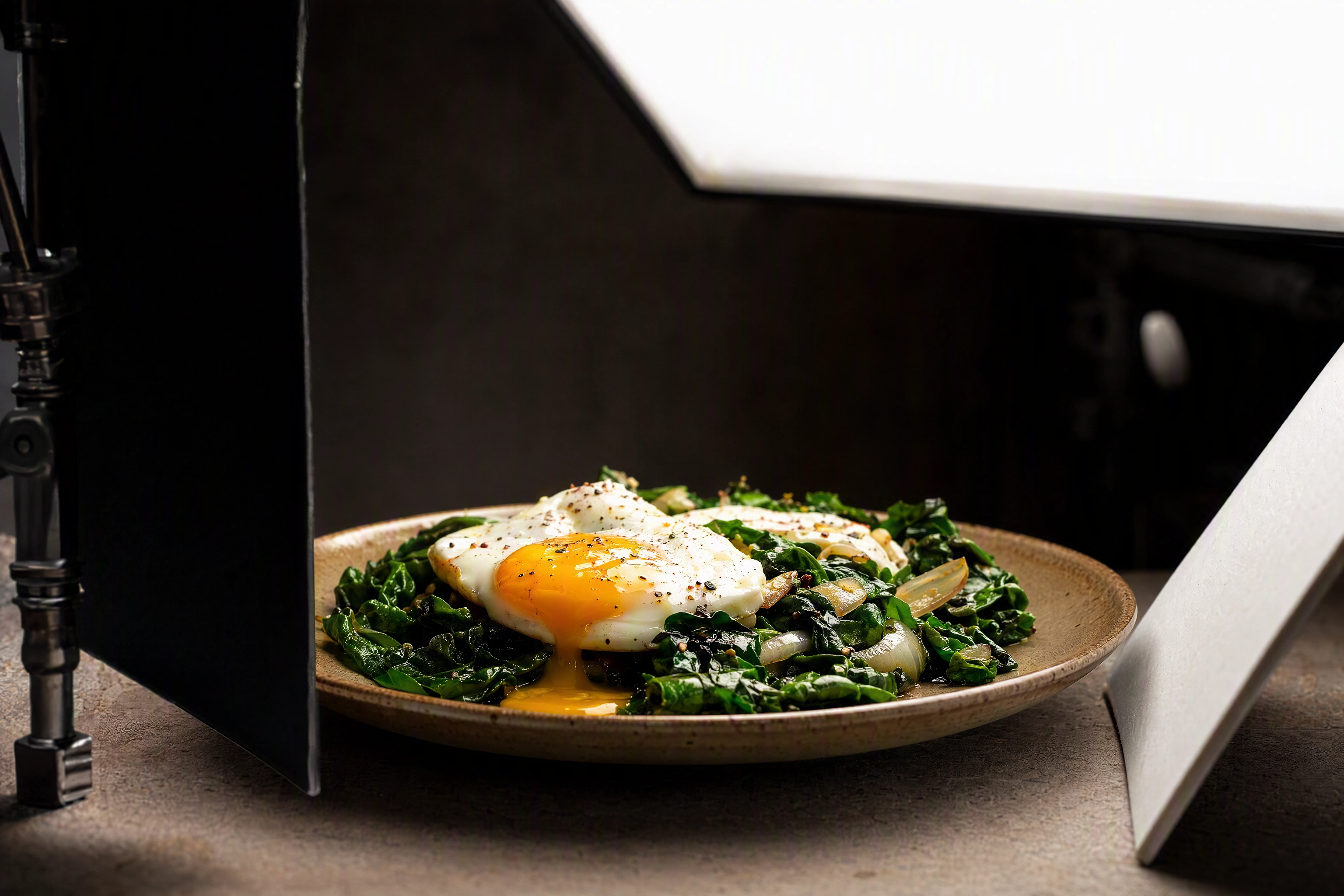 Plated dish lit by softbox and bounce cards, showing the controlled setup a professional food shoot fee buys
What That Fee Actually Buys You
The hourly rate is the least useful number in a photography quote. Two quotes at $300 an hour can mean a solo photographer with a reflector, or a photographer plus stylist plus studio hire. The gap in total project cost easily exceeds $3,000.
A professional food shoot fee generally covers:
- Pre-production — shot list, mood board, dish sequencing so hot food hits the camera at its best
- Shoot time — including setup and pack-down, which is not free time
- Post-production — selection, colour grading, retouching, export in the formats you need
- Delivery and licensing — the rights you get to actually use the pictures
What it usually does not cover:
- Food styling. This is a separate fee and a separate craft. For social content you can skip it. For menus, delivery app listings and anything where the image directly drives a purchase, a stylist is close to essential.
- The food itself. You're cooking multiple versions of each dish, and the ingredients come off your stock.
- Travel and parking. Melbourne quotes commonly add parking at cost and mileage around $0.60 per kilometre. In the CBD and inner north, parking is not a rounding error.
- Extra images. Additional processed images beyond the agreed deliverable are typically $30 plus GST each.
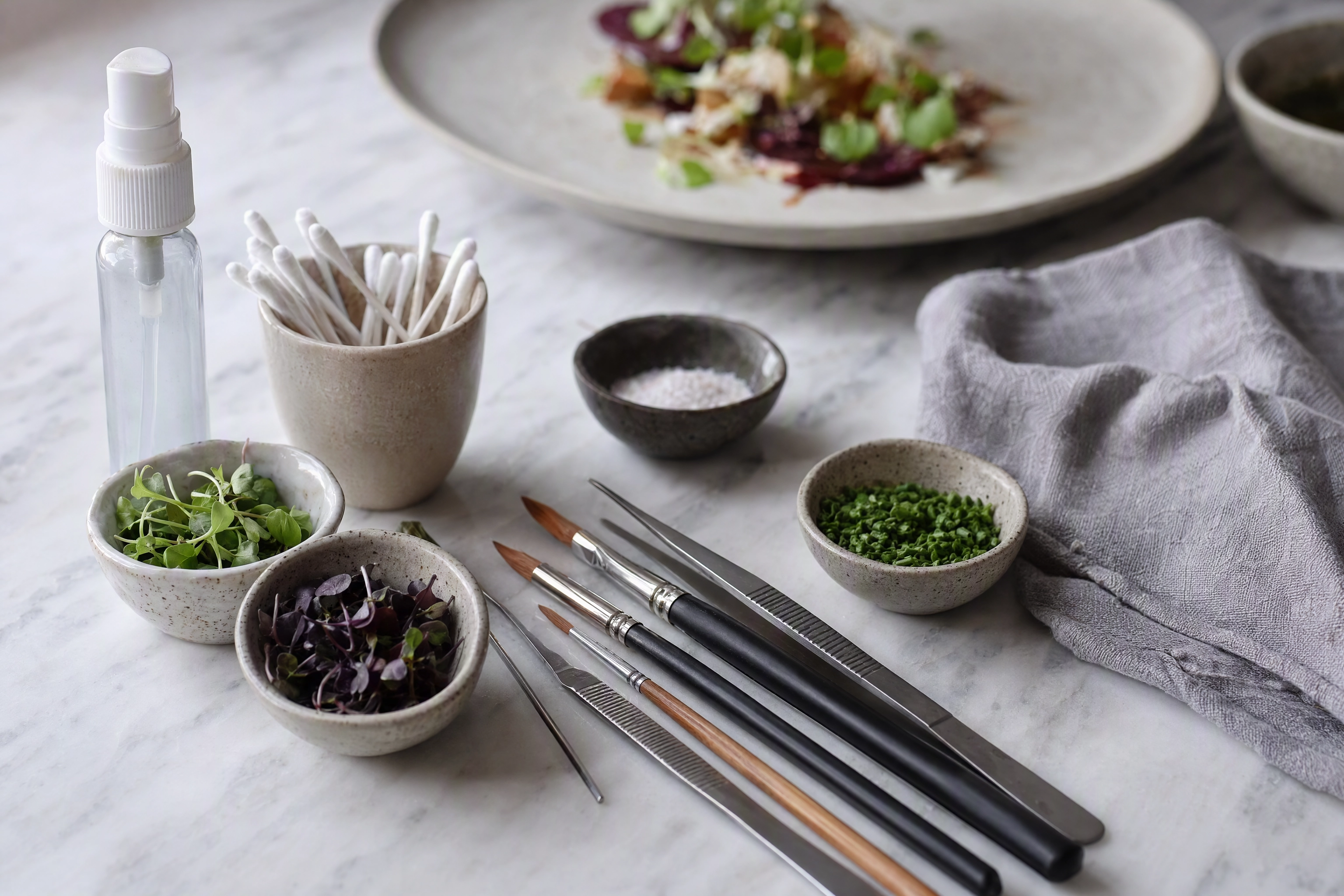 Food stylist toolkit on a marble bench showing the styling craft included in a food photography quote
On licensing: usage rights are a genuine line item, not paperwork. Images licensed for your website and socials are not automatically licensed for paid advertising, outdoor signage or third-party marketplaces. Ask explicitly what you're allowed to do with the files, for how long, and in which channels — before you accept the quote, not after a campaign is booked. It's worth asking what past clients received as a deliverable, too: a photographer who works regularly with hospitality clients will have a standard package and can tell you exactly what lands in your inbox.
Why Melbourne Is a Different Brief From Sydney
Melbourne's food photography demand is shaped by cafes in a way no other Australian city's is.
There were 2,812 cafes in Melbourne as of April 2026, up 2.12% since 2023. Critically, 2,168 of them — 77.1% — are single-owner operations rather than parts of larger groups. That's more than two thousand independent businesses that need strong visuals and have no marketing department to produce them. The City of Melbourne's own Census of Land Use and Employment tracks cafe and restaurant establishments and seating capacity across the municipality if you want to check density in a specific block.
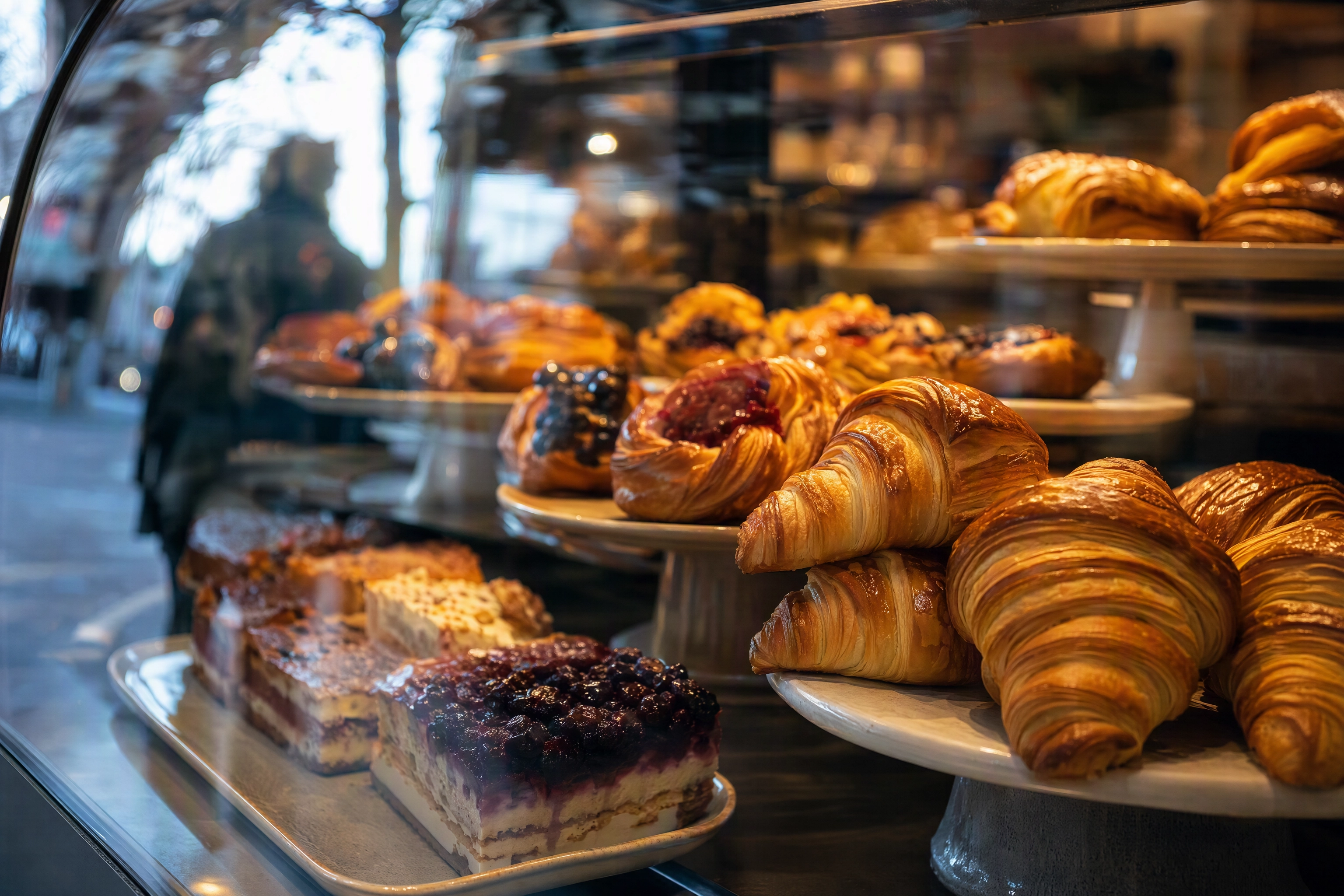 Cafe pastry cabinet seen through glass at eye level, where food presentation acts as the storefront
The competitive pressure is intense and local. Analysis of Melbourne cafe suburbs in 2026 found locations with 11 direct competitors within 500 metres. When a customer choosing brunch is scrolling past a dozen venues within a five-minute walk, the photograph is the storefront.
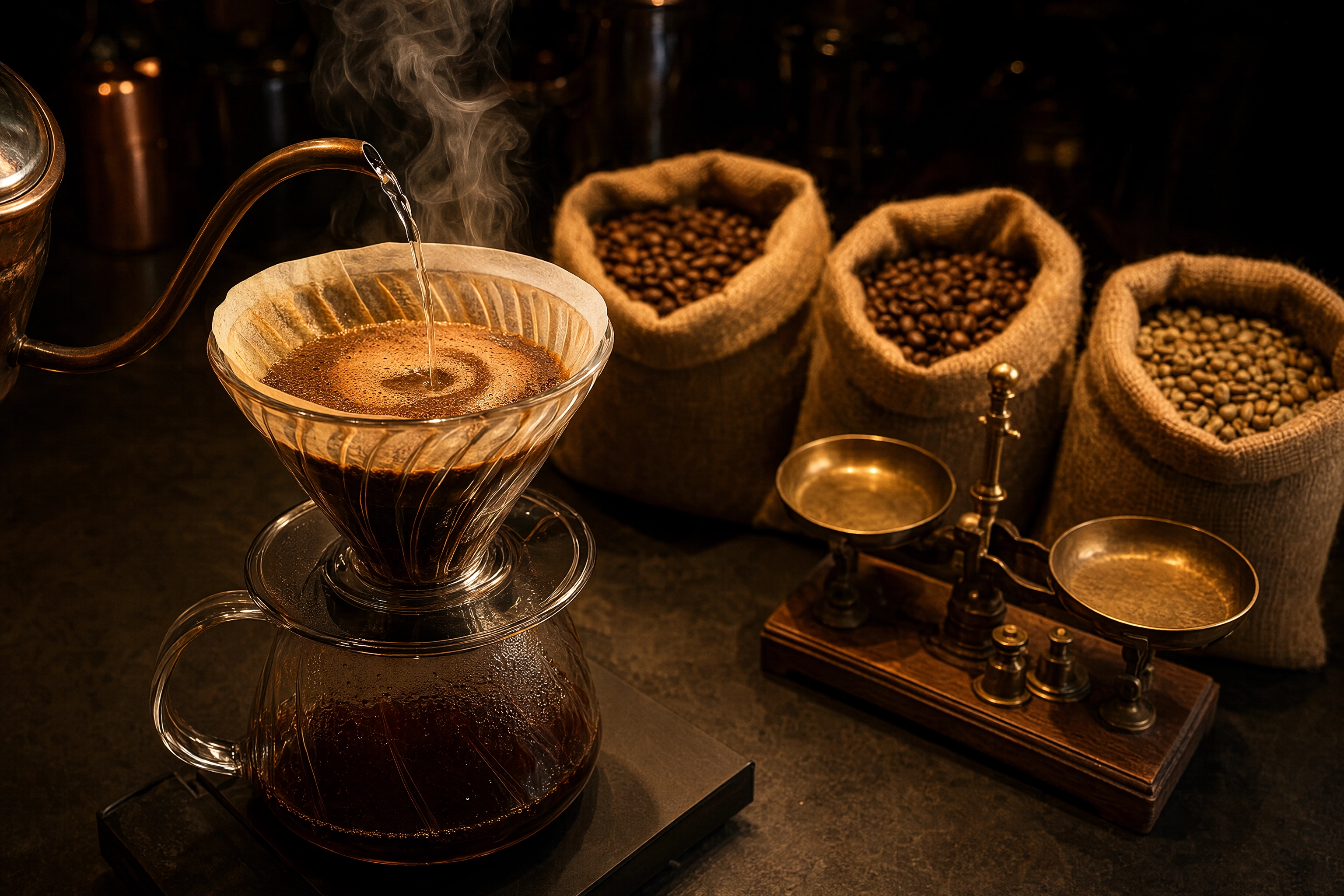 Pour-over coffee brew bar with single origin beans, the rotating specialty coffee programs Melbourne cafes photograph
The economics back this up. Australians spent an average of about $99 a month in cafes against $111 a month in restaurants, according to Lightspeed's 2026 State of Hospitality Industry Report, as reported by The Age — cafe trade sits remarkably close to restaurant trade in value, but cafe photo budgets are a fraction of restaurant photo budgets.
Then there's frequency, which is the actual cost driver:
- Brunch menus in Melbourne rotate seasonally — that's three or four menu changeovers a year
- Specials boards change weekly, sometimes daily
- Specialty coffee programs rotate single origins and seasonal drinks continuously
- Takeaway is the fastest-growing foodservice segment, projected at roughly 12% annual growth to 2031, and every delivery listing wants current photography
A Sydney fine-dining room shooting a stable menu twice a year has a manageable photography budget. A Fitzroy cafe changing its brunch menu four times a year, running a weekly special, and maintaining listings on two delivery platforms has a genuinely different problem — and it is a frequency problem, not a quality problem.
Our cafes and coffee shops guide goes deeper on this segment, and coffee photography and brunch and breakfast photography cover the two categories that define Melbourne's visual identity. You can also browse every food type if your menu leans somewhere else entirely.
The same pressure reaches beyond cafes. Packaged food and beverage brands selling through Melbourne grocers need shelf-ready product imagery, and food content creators working with local venues are commissioned on exactly the same seasonal cycle.
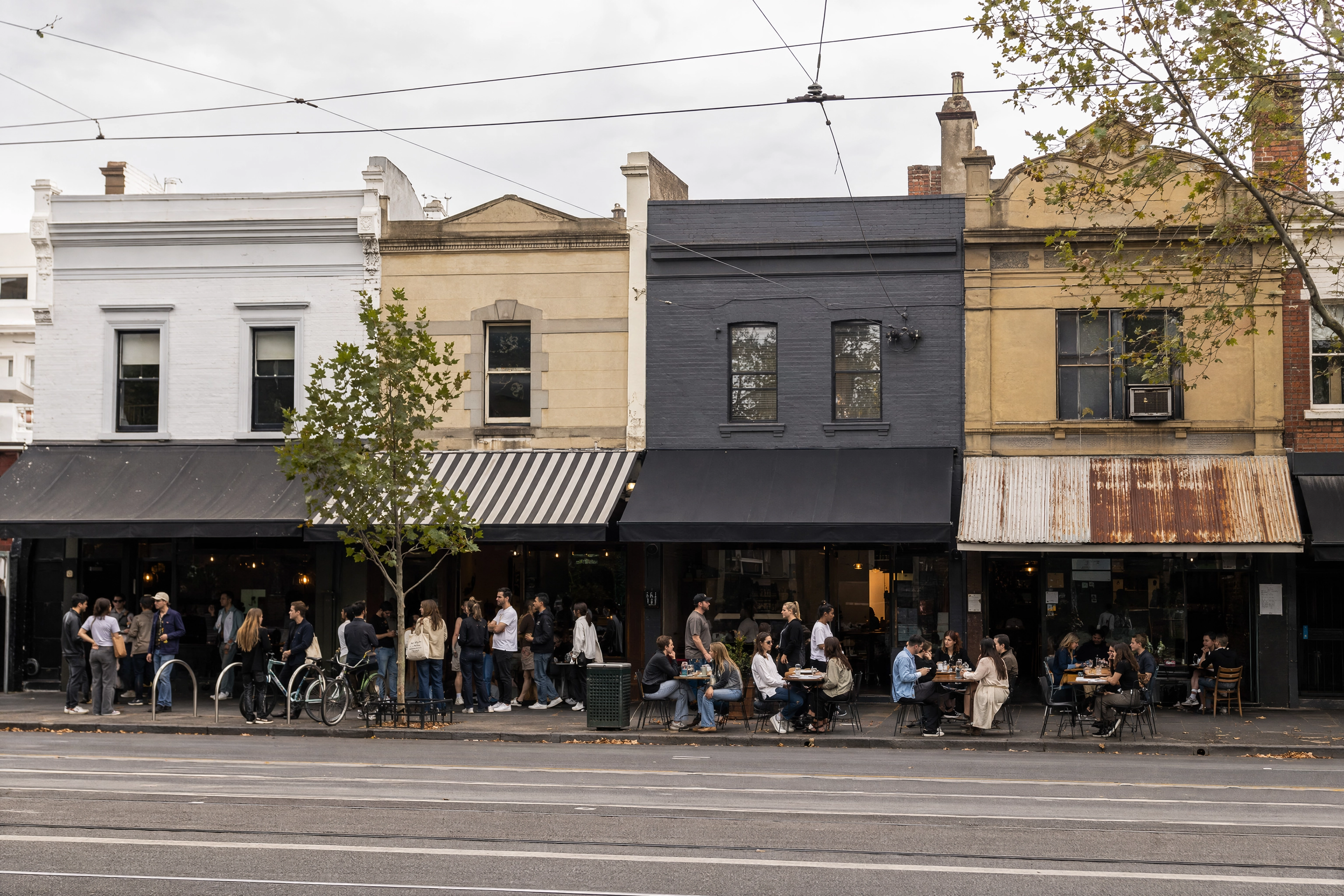 Row of competing independent cafes on a Melbourne street showing the density that drives food photography demand
The Real Number Is Annual, Not Per-Shoot
Most pricing guides stop at the day rate. That's the wrong unit of measurement, because nobody photographs a menu once and never again.
Run the annual model for an independent Melbourne cafe:
| Cadence | Per session | Annual total |
|---|---|---|
| 2 half-day refreshes | ~$1,000 | ~$2,000 |
| 3 half-day refreshes | ~$1,000 | ~$3,000 |
| 4 half-day refreshes | ~$1,000 | ~$4,000 |
| 3 full-day shoots | ~$2,000 | ~$6,000 |
| 4 full-day shoots + styling | ~$2,300 | ~$9,200 |
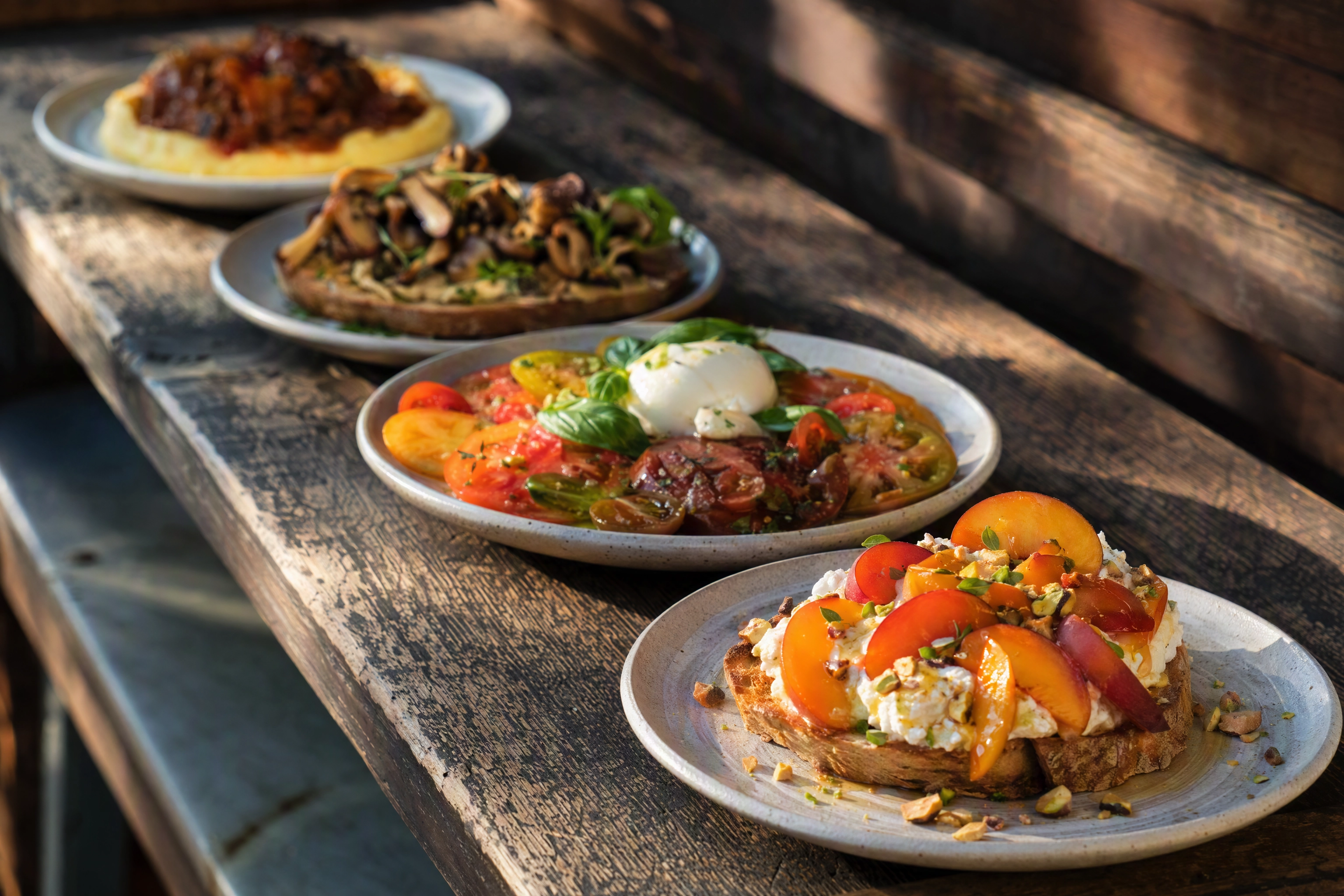 Four seasonal brunch dishes in a row showing the menu rotation that drives repeat food photography costs
So the realistic recurring spend for a venue keeping its photography genuinely current is roughly $4,000–$9,000 a year, before extras. For a single-owner cafe running on hospitality margins, that is a serious line item — and it competes directly with equipment, wages and rent.
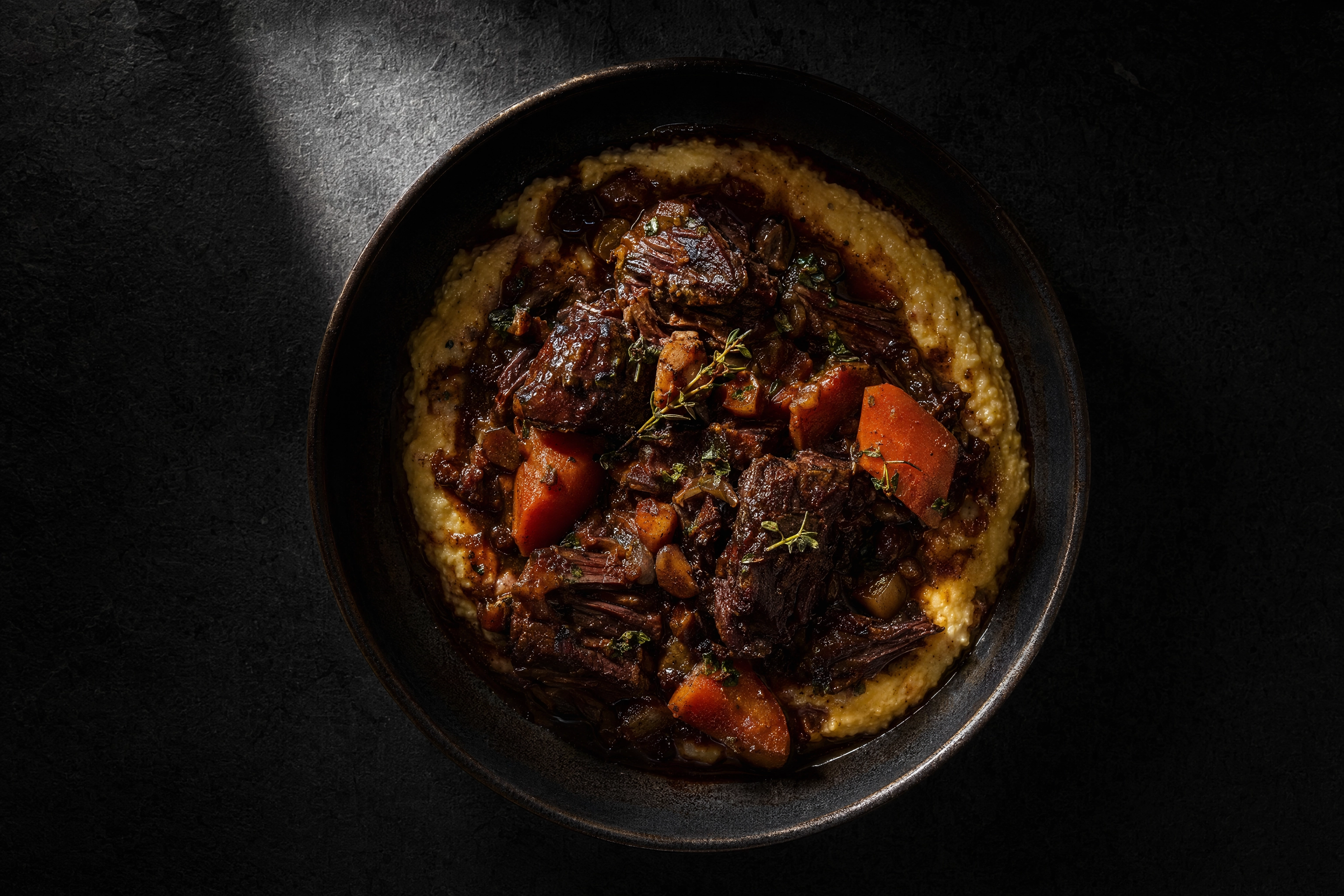 Overhead moody shot of a winter braise, the seasonal dish that replaces a summer menu photo
This is why most independent venues quietly fall behind on photography. They book one good shoot, then run those same images for two years while the menu moves on underneath them. The photos aren't bad. They're just no longer what the kitchen serves.
Where AI Food Photography Fits — and Where It Doesn't
The honest case for AI here is narrow and specific: it solves the frequency problem, not the craft problem.
Where it genuinely works:
- Seasonal menu changeovers — new dishes photographed the week they launch, not the next time a shoot is affordable
- Weekly specials — content that could never justify a booking
- Delivery listings — platforms reward current, well-lit, consistent imagery, which is why ghost kitchens lean on it hardest
- Gap-filling — the dish that was missed on shoot day, or has since been reformulated
- Consistency — pulling phone photos taken by different staff at different times into one coherent look
FoodShot turns a phone photo of a dish into a 2K, menu-ready image in about 2 minutes, using a library of 200-plus styles across delivery, menu and fine dining categories, and you can browse the full use-case range to see which fits your venue. Pricing starts at $15 USD per month — roughly $23 AUD at 2026 exchange rates — for the Starter plan, with Business at $45 USD ($68 AUD) and Scale at $99 USD ($149 AUD). Annual billing cuts those by 40%. Currency conversion moves, so treat AUD figures as approximate.
Set against a $1,000 half-day shoot, a year of the Starter plan costs less than a third of one session.
Where it doesn't work — and you should know this before you sign up:
- It produces still images only. No video, no reels.
- It's food and beverage only. It is not a general-purpose photo editor and won't shoot your room.
- It works from your own uploads. It is not a stock library, so you still need to photograph the actual dish.
- Commercial rights require a paid plan. There is no free tier on the web.
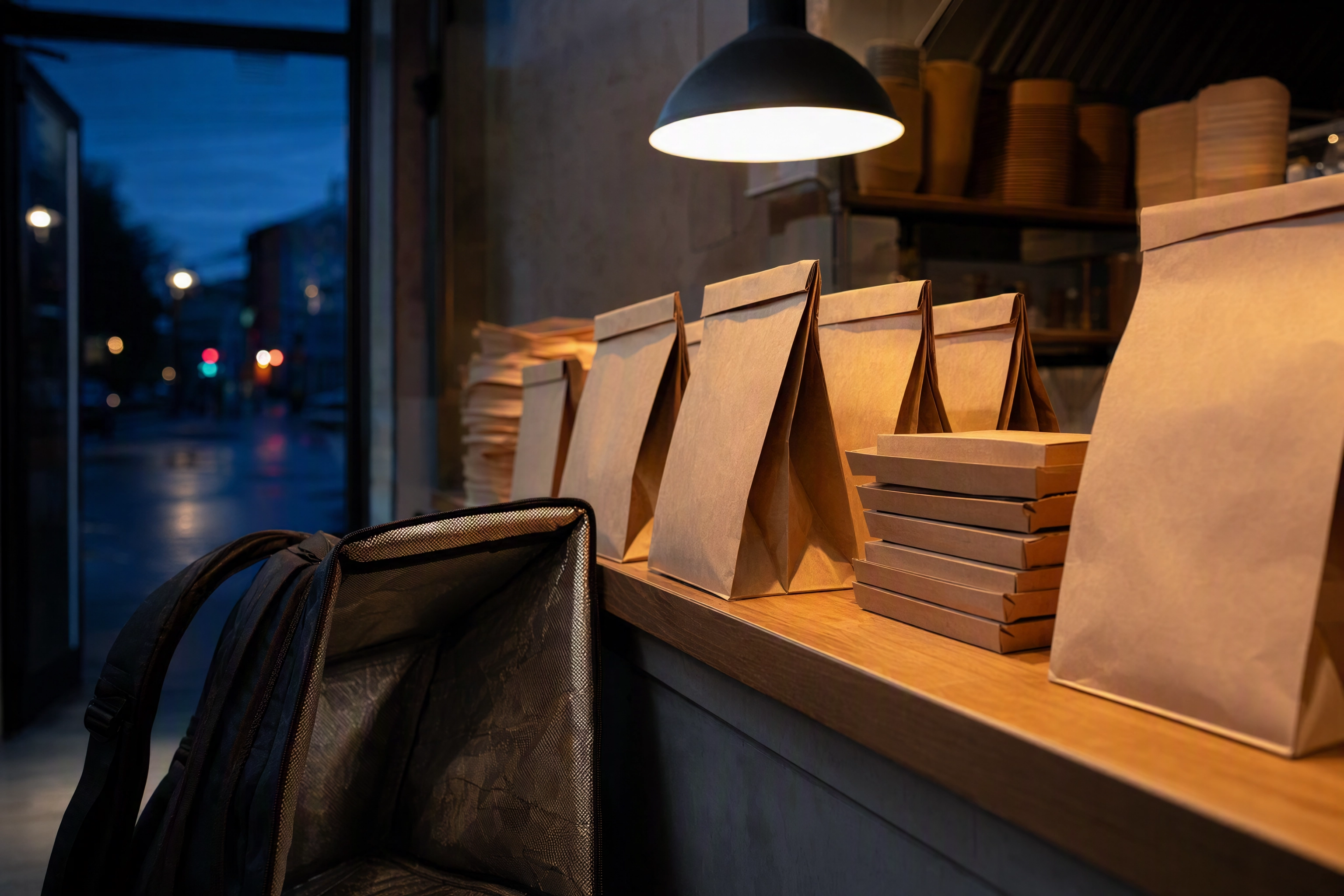 Delivery bags on a takeaway counter at dusk, the listings that need constantly refreshed food photography
That last point matters more than it sounds. Any image going on a menu, a delivery listing or an ad needs commercial licensing, whether it comes from a photographer or a tool.
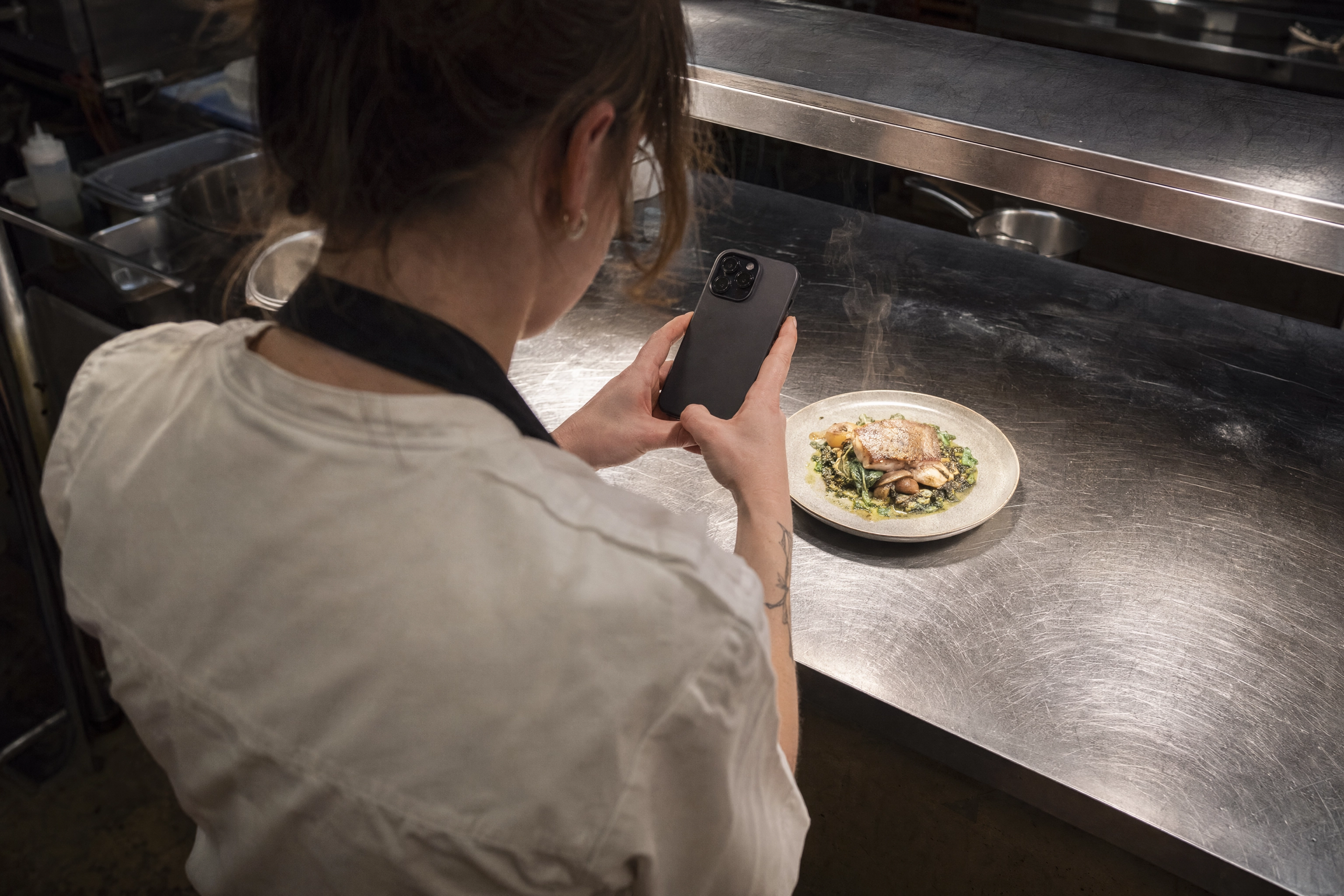 Cafe staff photographing a plated dish on a phone, the everyday input for AI food photography between shoots
When You Should Still Hire a Melbourne Food Photographer
There is work AI cannot do, and pretending otherwise would waste your money.
Hire a photographer for:
- Venue launches and brand identity. When you're establishing what your venue looks like, the photographer's eye is the brand, and their visual story becomes part of yours. That's a creative commission, not an image-processing task.
- Rooms, people and atmosphere. Your fitout, your baristas, your Saturday morning queue. A food photography tool does none of this.
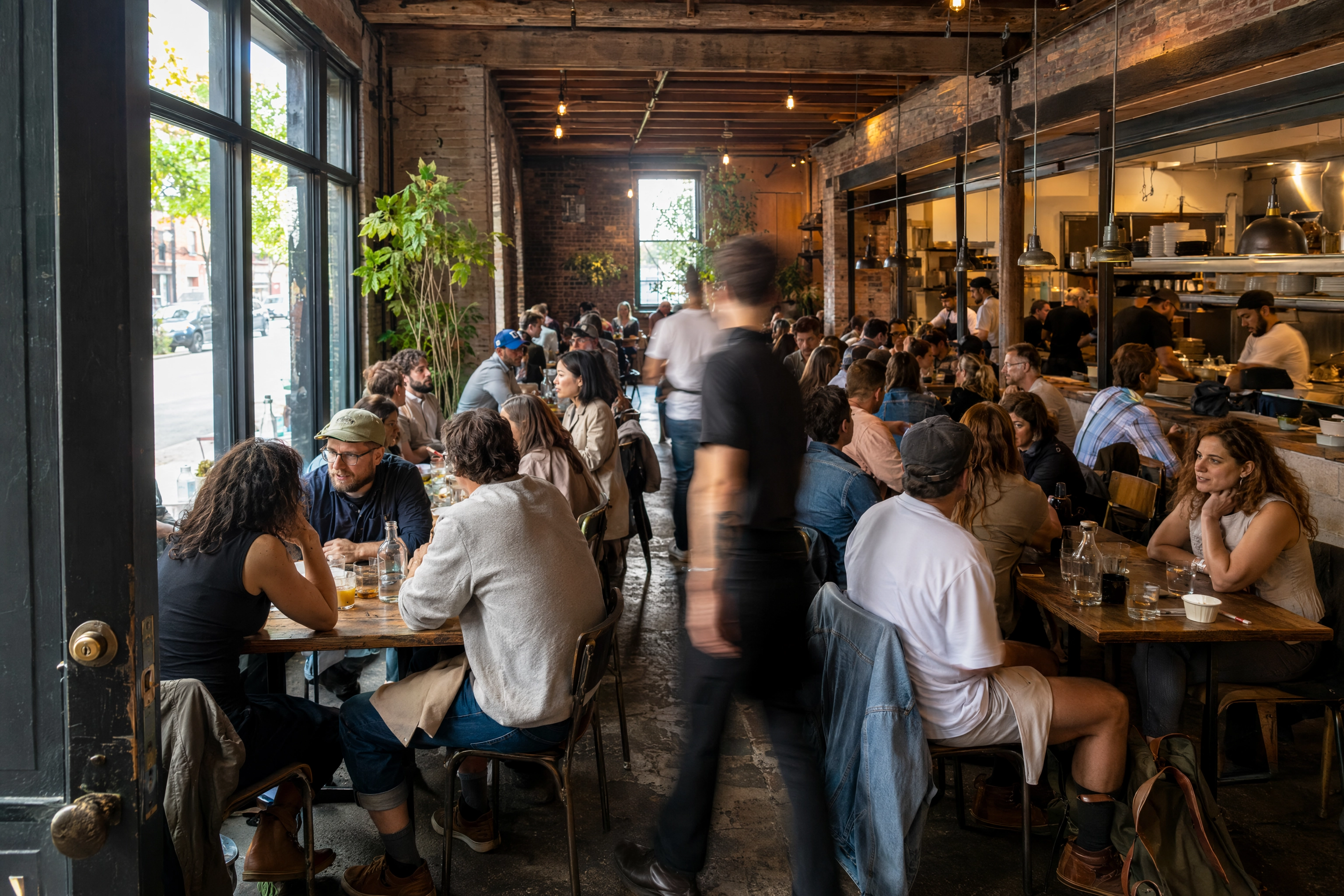 Busy cafe dining room full of customers, the atmosphere and interiors work that needs a real photographer
3. Cookbooks and editorial. Publishers commission specific photographers for specific visual languages, and the provenance is part of the deal.
4. Awards and press kits. Where images are scrutinised and their origin matters.
5. Campaigns built on physical styling. When the plating, the pour, the steam and the crumb are engineered in-camera by a stylist, that physical craft is the point.
Busy cafe dining room full of customers, the atmosphere and interiors work that needs a real photographer
3. Cookbooks and editorial. Publishers commission specific photographers for specific visual languages, and the provenance is part of the deal.
4. Awards and press kits. Where images are scrutinised and their origin matters.
5. Campaigns built on physical styling. When the plating, the pour, the steam and the crumb are engineered in-camera by a stylist, that physical craft is the point.
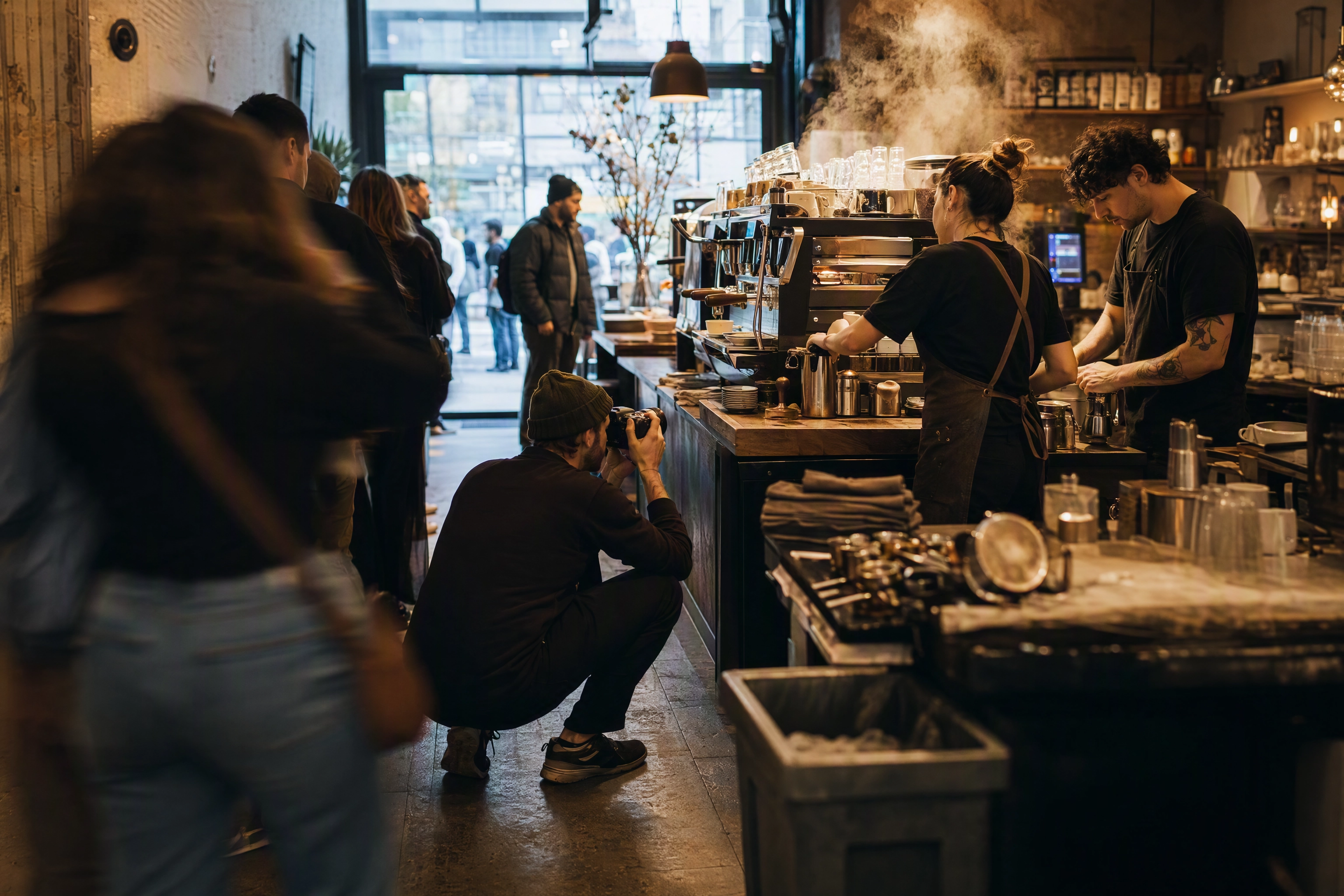 Photographer shooting baristas at an espresso machine, the venue and people work AI cannot replace
Melbourne has genuine depth of talent for this work. Photographers such as Jacob Manfred, Julia Wharington of Paddock 2 Pixel, Lee Bird, Hannah Caldwell and Peter Tarasiuk all work in food, drink and hospitality across the city, spanning bold campaign work for food and beverage brands, editorial styling, and high-end restaurant, hotel and winery imagery.
I'd recommend a simple process: shortlist on portfolio fit rather than price, ask each for a formal proposal against the same brief, and confirm licensing in writing before booking. Ask to see a full delivered gallery from a comparable job, not just portfolio highlights — that's the honest picture of what clients actually receive. If your venue sits in a specific niche, whether that's food trucks, catering, bars and lounges or hotels and resorts, prioritise someone with real work in that category.
(These are independent professionals mentioned for reference only. They have no affiliation with FoodShot AI.)
Brisbane and Perth: What Changes Outside Melbourne
If you're comparing markets or running venues in more than one city, the pattern is consistent.
- Brisbane and Perth are growing markets with strong mid-range supply. Both typically run 10–20% cheaper than Sydney and Melbourne for photographers of equivalent experience.
- Adelaide is consistently the most affordable Australian capital for commercial photography.
- The headline saving narrows once insurance, licensing and post-production are counted. A cheaper day rate with a narrower usage licence is not always cheaper.
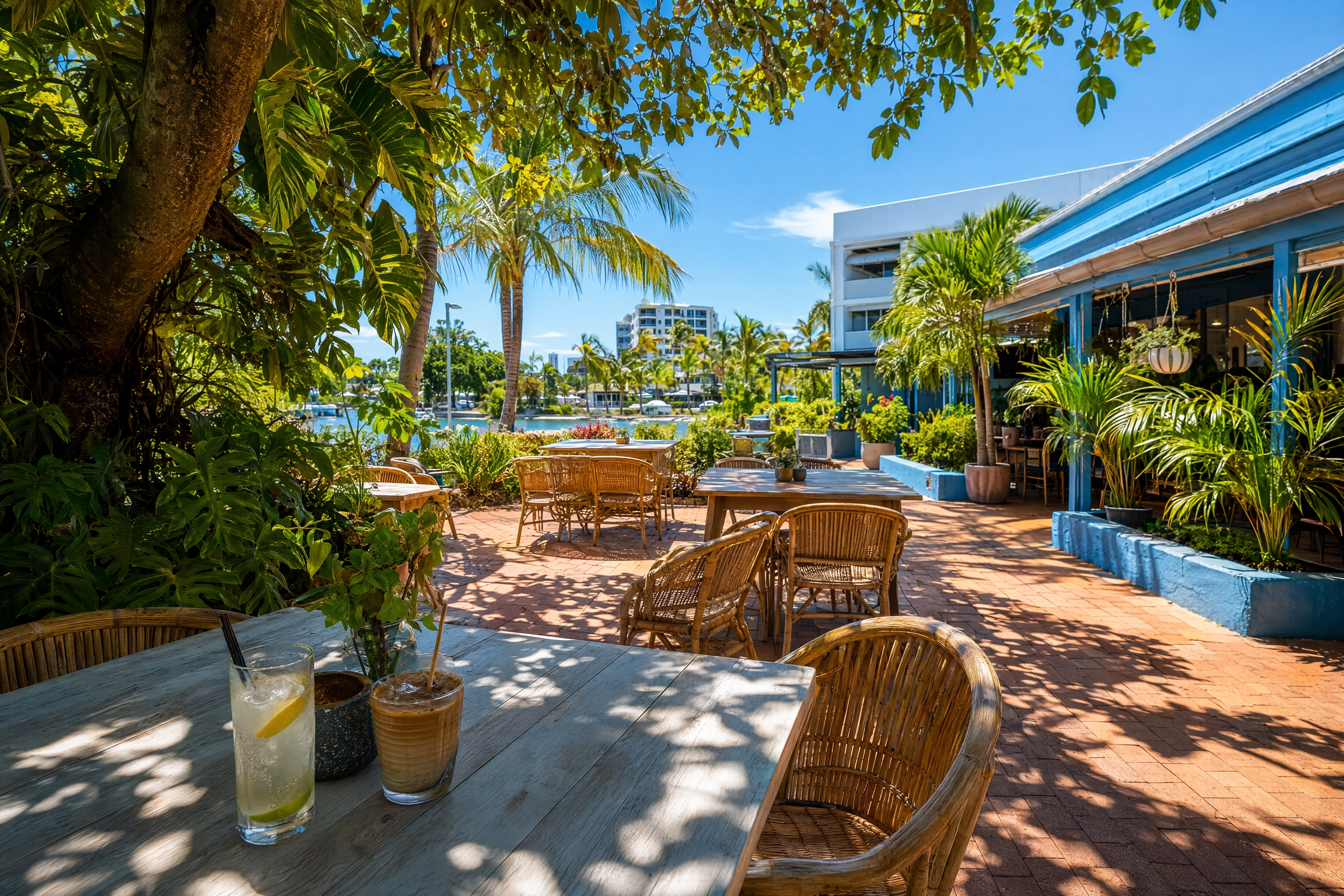 Sunlit subtropical cafe courtyard representing Brisbane and Perth food photography markets
A food photographer in Brisbane or a food photographer in Perth will still quote in the same structure — hourly, half day, full day, or per dish — and the annual cadence problem is identical. A Perth cafe changing its menu four times a year faces the same arithmetic as a Melbourne one, just 10–20% lighter.
A Practical Hybrid Setup for a Melbourne Cafe
The setup that works for most independent venues isn't one or the other.
- Book one proper shoot a year. Half or full day. Use it for your brand images: the room, your people, your five signature dishes, your coffee program. This is money well spent, and it's what I'd recommend every venue protect in the budget first.
- Ask your photographer for the look, not just the files. Note the angles, the surfaces, the light direction, the crop. That's your visual template for the rest of the year.
- Handle the churn yourself. New seasonal dishes, weekly specials, delivery listing updates — shoot them on a phone in good window light and process them to match your established look.
- Keep one consistent style. Pick a style and stay with it across the year so your menu, socials and restaurants listings read as one brand rather than four different venues.
- Audit quarterly. Walk your own menu and delivery listings as a customer. Any dish whose photo no longer matches what leaves the pass gets reshot.
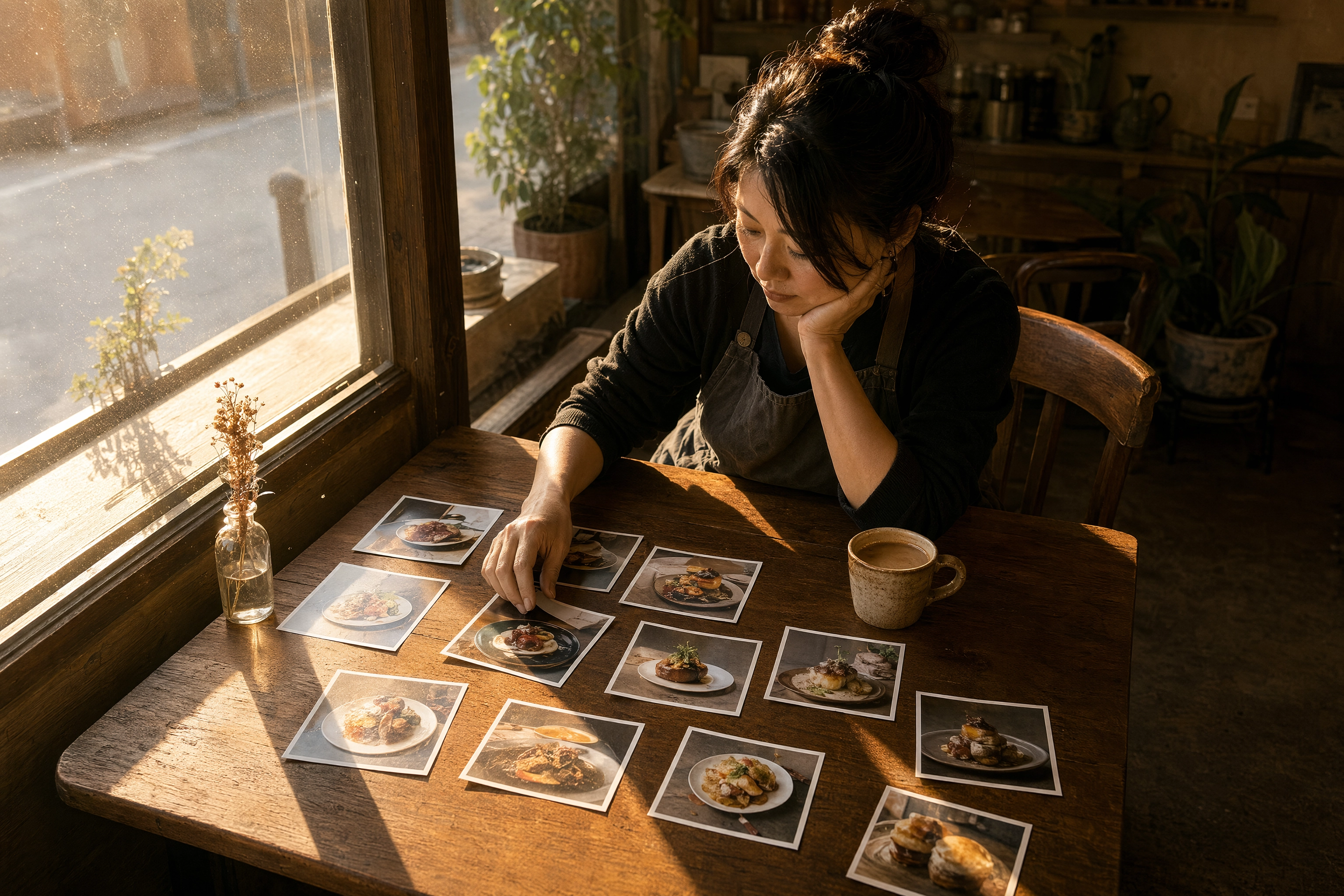 Cafe owner reviewing printed food photos at a table, auditing which menu images still match the kitchen
That structure gets you the photographer's craft where it compounds, and removes the cost barrier from the recurring work. If you want to see how the economics compare in detail, our food photographer alternative breakdown runs the full comparison.
Frequently Asked Questions
How much does a food photographer in Melbourne cost in 2026?
Between $250 and $500 AUD per hour, $700–$1,200 for a half day and $1,500–$2,500 for a full day. Quoted per dish, expect $80–$210. A typical 10-dish menu shoot over three to four hours runs $800–$2,100 all in, and a full day including a food stylist starts from $2,200 ex-GST.
Is Melbourne more expensive than Sydney for food photography?
They're broadly comparable. Both cities hold the deepest pools of specialist commercial photographers in Australia, which keeps mid-range pricing competitive. Marketplace data puts Melbourne about 2% above the national average, and Sydney around 12% above it, so Sydney carries a slight premium — but for equivalent experience the difference is small.
How much does a food photographer charge per dish?
$80–$210 per dish is the standard Australian range when a photographer quotes by deliverable rather than by time. Per-dish pricing suits small, clearly defined jobs. For anything above roughly ten dishes, a half-day or full-day rate is almost always cheaper.
Do I need a food stylist as well as a photographer?
For social content, no. For menus, delivery listings and advertising — where the image directly drives a purchase decision — a stylist makes a substantial difference and is close to essential. It's a separate fee, and a full day with styling starts around $2,200 ex-GST.
Can AI food photography replace a Melbourne food photographer?
For recurring work, largely yes: seasonal menu updates, weekly specials, delivery listings and gap-filling. For venue launches, brand identity, interiors, staff, cookbooks and campaigns built on physical styling, no. Most venues do best hiring once a year for brand work and handling the churn with AI in between.
How often should a Melbourne cafe refresh its food photos?
Match your menu. Melbourne brunch menus typically rotate seasonally, so three or four refreshes a year keeps imagery honest, plus weekly updates for specials. Hiring for that cadence costs roughly $4,000–$9,000 a year, which is why most independents mix a single paid shoot with a lower-cost method for everything else.
What do food photographers in Brisbane and Perth charge?
Typically 10–20% less than Sydney and Melbourne for equivalent experience, using the same hourly, half-day, full-day and per-dish structures. Adelaide is generally the cheapest Australian capital. Confirm what usage licence is included, since a lower day rate sometimes carries narrower rights.
Does a quote include GST and commercial usage rights?
Never assume either. Australian photographers quote both GST-inclusive and "plus GST," a 10% difference on every invoice. Usage rights are separate again — images licensed for your website and socials may not cover paid advertising or outdoor signage. Get both confirmed in writing before you book.
Getting Started
If your menu has moved on since your last shoot, you don't need to choose between expensive and outdated. Book the photographer for what only a photographer can do, and close the gap on everything else.
Browse the full range of solutions to see where it fits your operation, or read more on the FoodShot blog. You can try FoodShot AI on the Starter plan to see the output quality first, and cancel anytime.