How to Start a Catering Business in 10 Steps (2026)
 Ali Tanis11 min read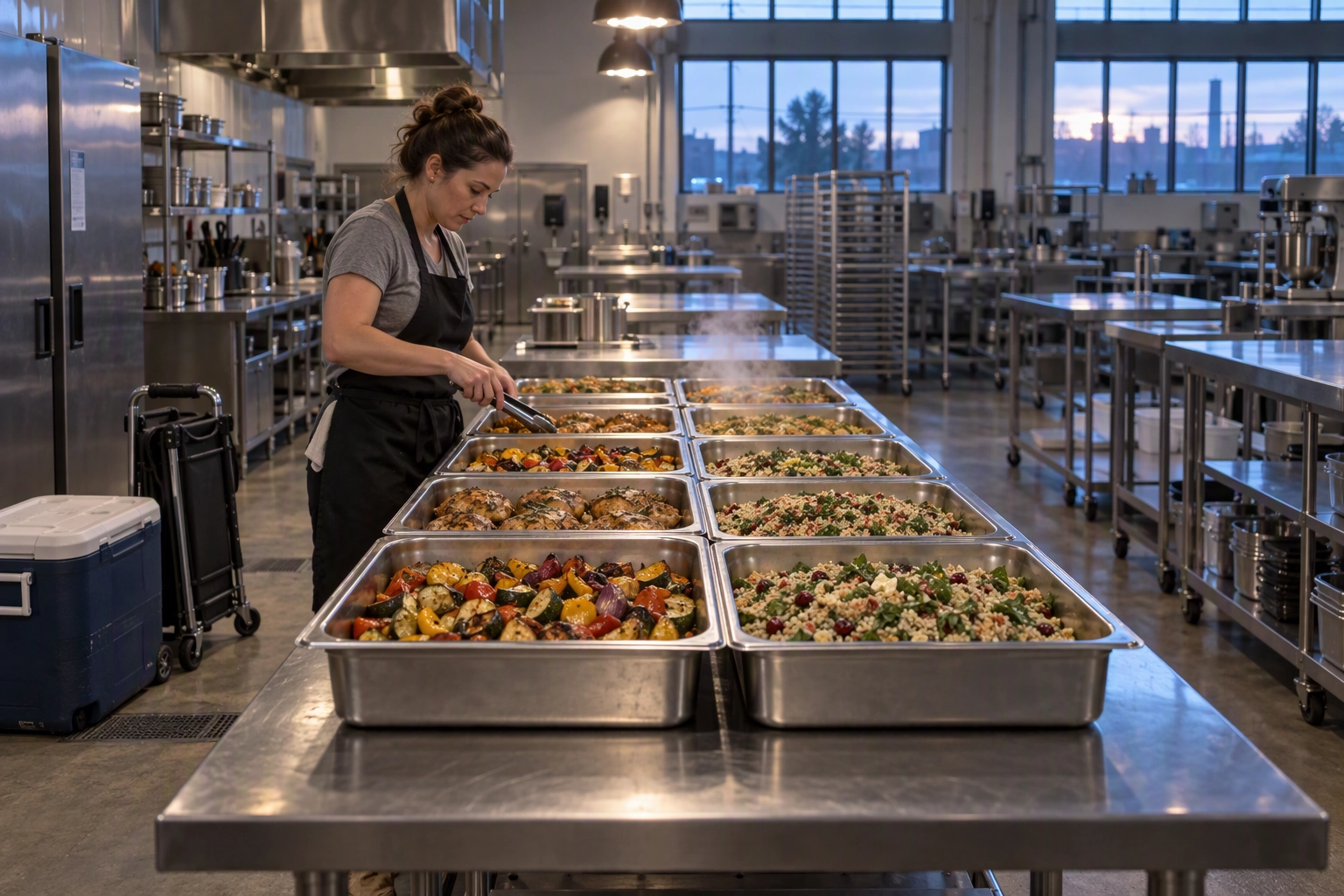
If you want to know how to start a catering business, here is the short version: pick one niche, cook in a licensed kitchen, price every job per person from real costs, and show clients photos before they ever taste your food. The paperwork takes four to eight weeks.
Quick Summary: Learning how to start a catering business comes down to a niche, a health permit, a licensed kitchen (rented by the hour is fine), liability insurance, and a per-person price built on a 27-35% food cost. The step most guides skip is the portfolio: catering proposals close on food photos, and new caterers usually have none.
Step 1: Choose a Catering Niche
"We cater everything" is how a new catering company disappears. Planners, office managers and couples hire specialists, so choose the events you want to be known for.
| Niche | Typical format | 2026 price per guest |
|---|---|---|
| Corporate drop-off | Trays, boxed lunches, no staff | $10-$25 |
| Social and private events | Staffed buffet or stations | $25-$50 |
| Weddings | Plated or family-style | $45-$120+ |
Corporate drop-off is the easiest entry point for anyone starting out: no servers, weekday orders, repeat accounts. Weddings pay more per plate but book 6-12 months out and demand tastings, rentals and a full team. If weddings are your goal, our page on wedding and event caterers covers how those proposals get judged.
Other proven services include private chef dinners, corporate dining, grazing tables like charcuterie boards, and meal prep services that fill quiet weekdays.
Step 2: Write a Lean Business Plan
Most advice on how to start a catering business says "write a plan" and stops there. You don't need 40 pages. You need one page that answers five questions:
- Who books you (niche and local market)?
- What do you sell (dishes and service style)?
- What does one guest cost you, and what do you charge?
- Where do you cook, and what does that space cost per month?
- How many events per month cover your fixed costs?
That last number is your break-even. If rent, insurance and software run $1,200 a month and each drop-off order clears $300 after food and labor, you need four orders a month before you earn anything.
Small businesses typically spend $20,000-$65,000 to launch from a shared kitchen, though you can go far leaner by renting hours only when jobs are booked. The SBA's business plan guide has free templates to help, and our full plan walkthrough is coming later this month.
Step 3: Register the Business and Get Licensed
Pick a business name, then search your state's registry to confirm the name is free before you print anything. Most caterers form an LLC to separate personal assets from business debts.
Next, get a free Employer Identification Number from the IRS. You'll need it to open a bank account and hire staff.
Catering Business License and Health Permits
That license is really a stack of permits: a general business license from your city or county, a sales tax permit from your state, and a food service permit from the local health department.
The health department permit takes the longest. In New York, for example, you must apply at least 21 days before you open. Inspectors review your kitchen, recipes and food handling plan.
Most states also require a Certified Food Protection Manager under section 2-102.12 of the FDA Food Code. The ServSafe Manager exam is the common route: 90 questions, two hours, 70% to pass, with courses around $129-$175.
Alcohol needs its own permit. Many new caterers skip it and let the host supply drinks or partner with a licensed mobile bar. The SBA licensing guide and the Los Angeles caterer starter kit show how many agencies can be involved.
Step 4: Pick Your Kitchen: Commercial, Commissary or Home
The kitchen question decides how to start a catering business in your city more than any other rule. Most health departments require caterers to cook in a licensed commercial facility. Your three realistic options:
- Commissary or shared kitchen: $15-$40 per hour, or $250-$1,250 a month for regular access. Storage adds $50-$200.
- Borrowed licensed space: a church, restaurant or community center, as long as it is inspected and you sign a rental agreement.
- Your own facility: only once steady volume justifies a lease.
Find hourly commissary time first. It's the smart default: you pay only when an event is booked, and the facility already passed inspection. Our breakdown of ghost kitchen rent costs follows the same pricing logic.
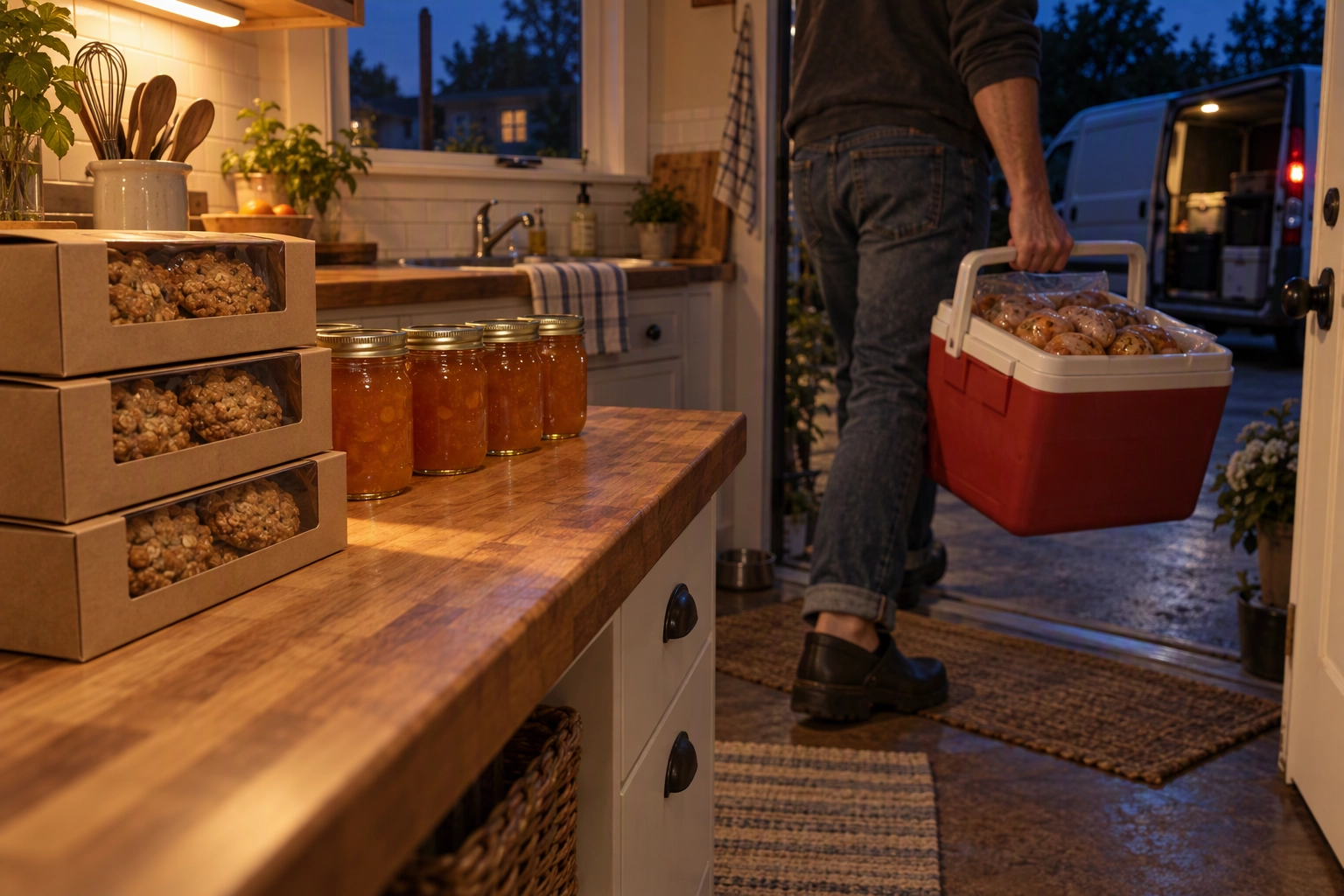 Home kitchen with cottage-food cookies and jam on the counter while perishable catering food leaves in a cooler for a licensed kitchen
How to Start a Catering Business From Home
The honest answer: usually not for the cooking itself.
Cottage food laws let you sell shelf-stable items like cookies, bread and jam from home. Catering involves meat, dairy, cooked rice and other foods that need temperature control, so it falls outside those laws in most states. King County, Washington, for example, requires a separate commissary for catering.
California's home kitchen law allows up to 30 meals a day, 90 a week and $100,000 in yearly sales, but LA County's MEHKO program covers meals served from the home, not off-site catering.
What does work from home: the office, sales calls, recipe testing, and baked goods under cottage rules. Run the business side from your personal kitchen table and rent a licensed space for production days. Starting catering this way keeps fixed costs near zero, and many home bakers grow into events exactly like this.
Step 5: Get Insured Before the First Event
Insurance is the line item people researching how to start a catering business most often underestimate. Venues and commissaries ask for a certificate of insurance before you set foot inside. The core policies:
- General liability for slips, burns and property damage at events.
- Product liability for foodborne illness claims.
- Commercial auto if you transport food in your own vehicle.
- Workers' compensation once you hire staff, required in most states.
General liability for a small caterer averages about $141 a month. Our guide to catering business insurance breaks down each policy, typical limits, and what venues actually require.
Step 6: Build a Menu and Price It Per Person
Pricing is where how to start a catering business turns into how to stay in business. Begin with 12-15 dishes you can cook perfectly for 20 guests and for 150. Each one should hold well, travel well and share ingredients, so you buy in bulk and waste less.
Then cost it. Weigh a portion, price every ingredient, and aim for a food cost of 27-35% of your selling price. Add labor, rentals, delivery and overhead to get your full cost per guest.
The formula most caterers get wrong: divide cost by (1 minus your target margin), don't mark it up. If one guest costs you $32 and you want a 35% margin, $32 ÷ 0.65 = $49 per person. A 35% markup gives you $43, and that $6 gap is your profit.
On top of the per-person price, most caterers charge an 18-22% service charge plus a delivery fee. For deeper work, see our guides on menu engineering and writing dish descriptions that sell.
 Engaged couple sampling six tasting portions at a caterer menu tasting, the moment per-person catering pricing gets approved
Step 7: Buy (or Rent) Equipment and Transport
Buy what you use every week. Rent what you use a few times a year.
Buy: insulated food carriers, full- and half-size hotel pans, sheet pans, a digital probe thermometer, chafing dishes, serving utensils and lidded storage.
Rent: tables, linens, china, glassware and tents. Rental companies deliver and wash them, which beats storing 200 plates.
Safety rules drive the equipment list. Hot food must hold at 135°F or above and cold food at 41°F or below, so carriers and thermometers matter more than fancy serving pieces. A cargo van or large SUV works for most small operators, as long as your auto policy covers business use.
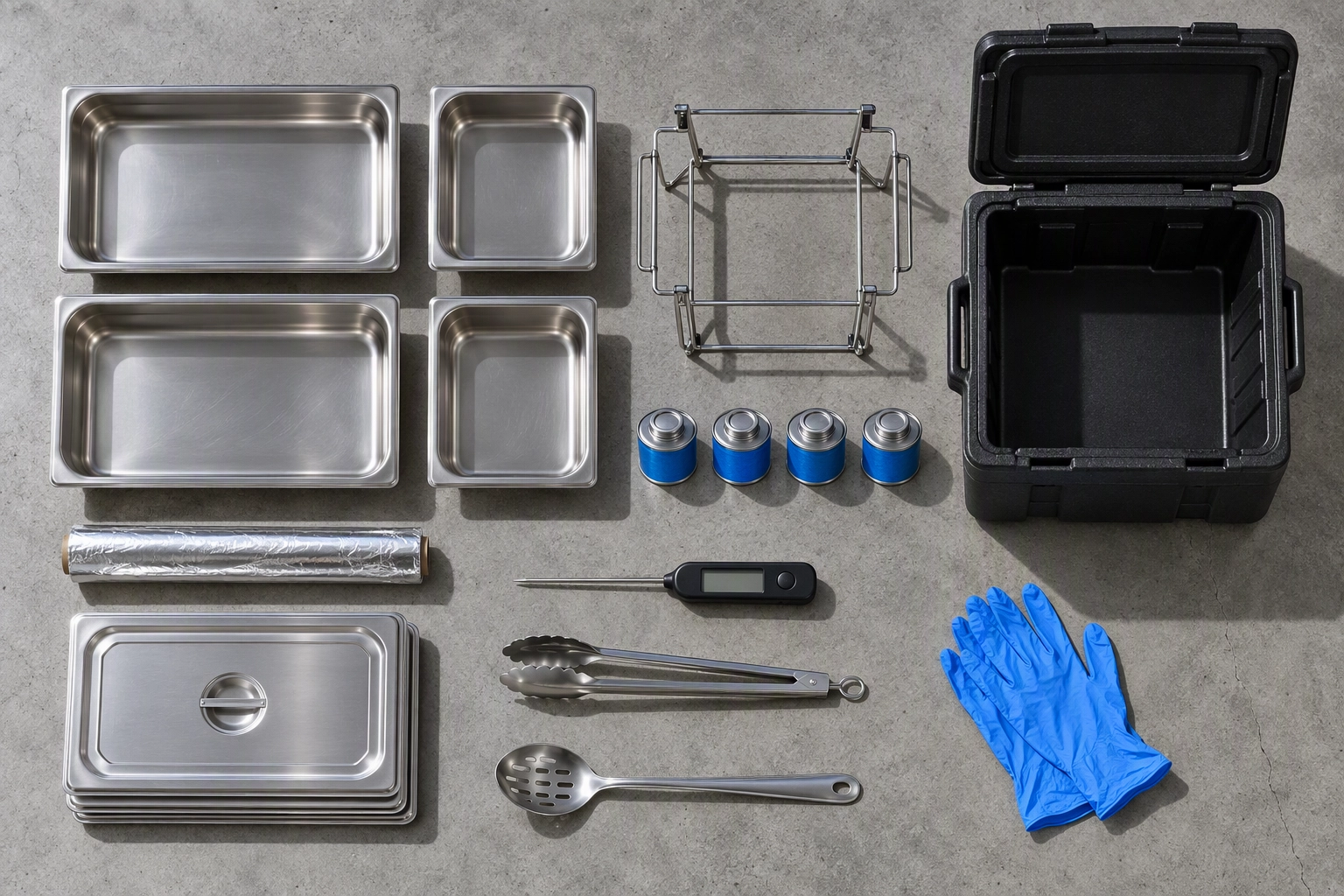 Overhead knolled flat lay of starter catering equipment: hotel pans, probe thermometer, chafing dish frame, fuel cans and tongs
Step 8: Decide Your Staffing Model
Early on, staff means you plus two or three on-call people, scaled per booking.
Rough ratios help you quote accurately:
- Drop-off: one driver, no servers.
- Buffet: about one server per 25 guests.
- Plated: about one server per 10-12 guests.
Build labor into every quote at an hourly rate that includes setup and breakdown. Check whether your state treats event staff as employees or contractors; misclassification is expensive.
Step 9: Build a Portfolio and Proposal Kit
Here's the step most guides on how to start a catering business skip. Clients book caterers they've never tasted, and a proposal is judged in seconds on its photos. Most newcomers have zero event photos, so first proposals go out with stock images or nothing.
Fix it before you pitch anyone. Cook your top ten dishes in a test session, plate them the way you'd serve them, and shoot each one by a window. Our guides to taking good food photos and natural light food photography cover the basics with a phone, and staging food covers plating for the camera.
If those phone shots look flat, FoodShot turns them into proposal-grade images in about 2 minutes each, so your first price sheet, website and proposal look like an established caterer's. Our catering food photography guide shows which shots win bookings.
Then build the kit: a one-page price sheet per person, three package tiers, your insurance certificate, and a short "about us" with your food safety certification. Use the same photos on your website so first impressions match.
 Caterer photographing a plated test dish by a window with a phone to build a catering portfolio for proposals
Step 10: Land Your First Clients
Every guide on how to start a catering business ends with marketing, but first clients come from people who already book food for events:
- Office managers and executive assistants: they order lunch every week. Drop off a free tasting box.
- Event venues and planners: ask to join their preferred vendor list. Our page on event venues explains what they look for.
- Google Business Profile: claim it under your exact business name with photos and service area so people who search online can find you.
- Referral partners: florists, photographers and rental companies share clients.
Do one discounted event for a nonprofit or community group to collect reviews and real event photos. Then follow a system: our guide on how to market a catering business covers ten marketing channels, and how to grow catering sales shows how to turn one-off events into repeat corporate accounts. More tactics: 20 catering marketing ideas, the catering marketing guide and food flyer ideas.
Operators on Reddit's small business forum agree: the ones who last build repeat accounts early.
Frequently Asked Questions
How much does it cost to start a catering business?
A lean drop-off operation can launch for a few thousand dollars using hourly commissary space and rented equipment. A full-service company with its own van and gear typically needs $20,000-$65,000.
Do I need a license to start a catering business?
Yes. You'll need a business license, a health department food service permit, usually a Certified Food Protection Manager, and a sales tax permit. Alcohol needs a separate license.
Can you run catering from home?
You can run the office and sales from home, but most states require the cooking to happen in a licensed commercial kitchen. Cottage food laws only cover shelf-stable foods, and California's home kitchen law excludes catering.
How profitable is catering?
Net margins typically run 10-20%. The businesses at the top control food cost, price per person with margin math, and book repeat corporate clients to fill weekdays.
Now you know how to start a catering business the way it actually works: niche first, legal kitchen second, and photos before the first pitch.